RESET is values-led in its commitments, adaptive in its pathway,
and locally owned in its application.
We help a community to see itself as an ecosystem -
and then to act like one.
What We Are
RESET is a community-systems intermediary that supports people and organizations to work together across the issues and opportunities that no one program, department, or sector can address alone. The goal is stronger, more connected communities that contribute to economic, social, environmental, and cultural well-being.
What We Help Build
Shared leadership across community, institutional, and sector boundaries
Stonger connections among people, initiatives, information, and resources
Practical ventures and initiatives that advance community well-being
Useful shared knowledge and digital infrastructure for coordination, learning, and informed decisions
Together, these efforts contribute to communities where economic, social, environmental, and cultural well-being are strengthened together—not pursued in isolation.
Why a Different Approach is Needed
Who RESET Works With
RESET works with people, organizations, and communities that know business as usual is not enough—and are ready to work in more connected ways.
We support and collaborate with:
Municipalities and local governments seeking to strengthen whole-community leadership and collaboration
Community futures organizations, community-development organizations, and economic-development organizations
Social-purpose organizations, community groups, resident leaders, and local networks
Institutions, social and community-finance organizations, funders, and partners seeking to support locally led, long-term change
Businesses, entrepreneurs, and other local contributors committed to community well-being
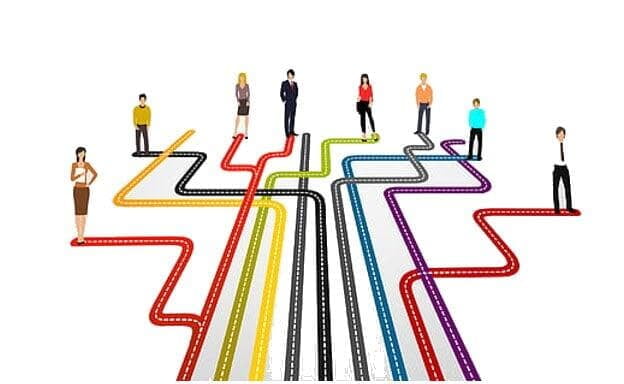
Most importantly, RESET works with people who are asking:
- How do we connect our efforts instead of adding another project?
- How do we build leadership and capacity across our community, not only within one organization?
- How do we turn shared priorities into coordinated action?

What Communities Can Expect
- A clearer shared picture of local strengths, issues, opportunities, and connections
- Stronger relationships, collaboration, and leadership across sectors
- Less duplication and fewer gaps among initiatives, programs, and resources
- More practical, coordinated action around locally identified priorities
- Greater capacity to sustain social, cultural, economic, and environmental well-being over time
What's Behind the Curtain?
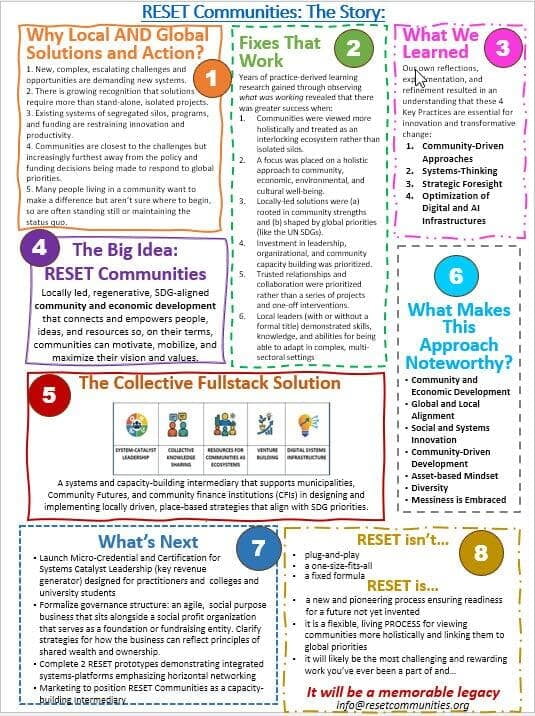
RESET’s approach has grown from more than 20 years of learning alongside community leaders across Canada and beyond.
It brings together practical experience in community-led development, systems practice, strategic foresight, social innovation, venture development, and digital systems infrastructure.
For those who want the fuller picture, here is what sits behind RESET’s approach
R.E.S.E.T. Communities Collaboration increases responsiveness to complex challenges and opportunities by partnering with multiple organizations to provide a range of supports and services that enhance social, economic, and environmental well-being.
Future-readiness is increased by supporting capacity for (1) community-driven development, (2) systems-practices, (3) strategic foresight, and (4) AI and digital optimization. We've learned these four components are necessary for the project and systems collaboration and informed decision-making that are essential for transformation and innovation.
Innovative approaches require being bold, perseverance, tenacity and a sprinkle of panic.
-- Michelle Baldwin
Many situations in life are similar to going on a hike: the view changes once you start walking. You don't need all the answers right now. New paths will reveal themselves if you have the courage to get started.
--James Clear
Leadership today is about courage. Courage to realize our challenges are complex and no one individual, organization, or sector can resolve them on their own. That means we have to let go of the idea that we alone have the answers. Instead, we need to strengthen our individual and organizational competencies in order to become system-catalyst leaders who call meetings before the answers are known, aren't intimidated by messy, and can ensure a culture where all voices are heard. Only then, can our collective gifts, experience, and wisdom be focused on building a better future for all.
--Brenda Herchmer
In times of change it is the learners who inherit the future. Those who have finished learning find themselves equipped to live in a world that no longer exists.
-- Eric Hoffer